
What to expect during a full home renovation.
A whole-home renovation is the biggest project most families ever take on, and the difference between a stressful one and a smooth one is almost never the hammer work — it's knowing what's coming. Here's the honest, phase-by-phase reality.
Phase 1: Consultation and scope (weeks 1–2)
Every good project starts with hard questions, not a tape measure: how do you actually live, what's broken about the current layout, what's the real budget including a contingency? We walk the home, flag the surprises we can predict (older K-W housing stock loves knob-and-tube wiring, galvanized plumbing and undersized panels), and define scope. You should leave this phase with an itemized, fixed-scope quote — not a vague per-square-foot guess. That's step one and two of our process, and it's free.

Phase 2: Design, selections and permits (weeks 2–6)
The unglamorous truth: renovations are won and lost before demolition. Finish selections — cabinets, tile, fixtures, flooring — have lead times of two to eight weeks, and a project that starts before materials are confirmed is a project that will stall mid-build. Meanwhile, permits go in: for structural changes, plumbing and electrical, your municipality's building division reviews the plans. In Waterloo Region this typically takes a few weeks depending on the city and season. Resist the urge to “start while we wait” — it almost always costs more than it saves.
Phase 3: Demolition and the honest middle (weeks 6–10)
Demo is fast and satisfying. What follows is the part nobody photographs: framing changes, electrical rough-in, plumbing rough-in, HVAC adjustments, inspections between each. This is when the house looks worst and progress feels invisible — pipes and wires don't photograph like quartz. It's also when surprises surface: opened walls occasionally reveal things no one could see. A professional quote carries a contingency (we recommend 10–15%) precisely for this, and a professional contractor tells you immediately, with options and prices — not at the final invoice.
Phase 4: The build-back (weeks 10–16)
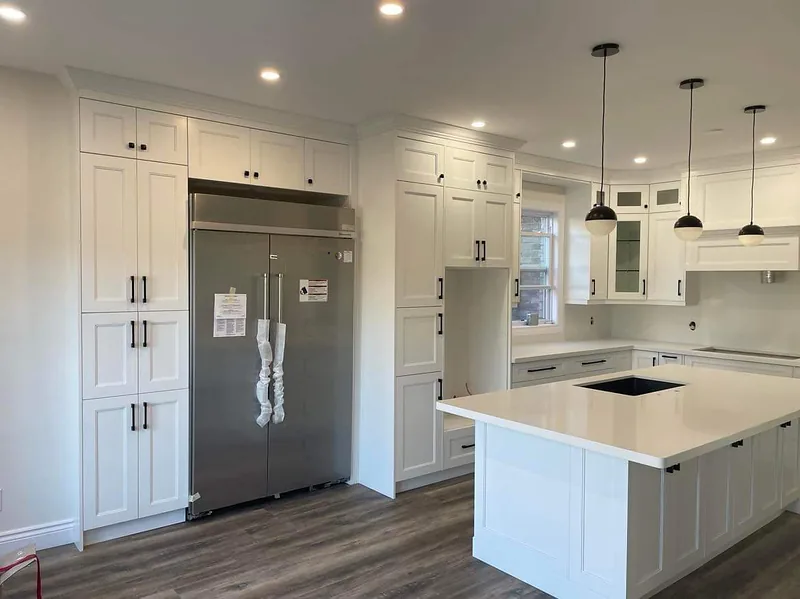
Insulation, drywall, and then the momentum returns: flooring, cabinetry, tile, trim and interior finishing, paint, fixtures. Rooms become rooms again, usually in quick succession. On a whole-home project this is where sequencing matters most — one accountable crew moving trade by trade through the house beats a rotating cast of subcontractors nobody can schedule.
Phase 5: Walkthrough and the punch list (final week)
We walk every room together and build the punch list — the small corrections every project has — and the job isn't done until the list is. You should expect a warranty in writing and zero pressure to sign off before you're satisfied.

Should you live in the house?
The question every family asks. For kitchen-plus-bathrooms scope, many families stay and we sequence the work to keep one bathroom and a temporary kitchenette running. For true whole-home guts, moving out for the heavy middle phases is usually worth it — for your sanity and the schedule. We'll tell you honestly which kind of project yours is at the consultation stage.
What it costs to do this in Waterloo Region
Scope drives everything, but as honest anchors: kitchens typically run $25,000–$70,000+, full bathrooms $15,000–$35,000+, and whole-home renovations scale with how much of the house those rooms represent. If you're weighing a full renovation against moving, that math — especially with today's land-transfer and moving costs — is a conversation worth having early. Start with a free consultation and we'll give you real numbers for your actual house.
Frequently asked questions
How long does a full home renovation take?
A realistic range for a substantial whole-home renovation is three to six months of construction, plus four to six weeks up front for design, selections and permits. Single rooms are faster — a kitchen typically runs 4–8 weeks — but combining rooms into one project is more efficient than renovating one room per year.
Can I live in my house during a whole-home renovation?
For kitchen-and-bathroom scope projects, usually yes — the work gets sequenced so a bathroom and a temporary kitchen stay functional. For full gut renovations, moving out during the heavy middle phases is usually better for both your family and the timeline.
How much contingency should I budget for a renovation?
Plan 10–15% on top of the quoted price for genuine unknowns — what's inside walls, under floors, and behind decades of previous work. In older Kitchener-Waterloo homes, wiring, plumbing and panel upgrades are the most common surprises. A contingency you don't spend stays in your pocket.
Browse by service

Let's build something exceptional.
Tell us about your project and we'll get back within one business day with next steps and a free consultation.
Planning a project like this?
Tell us about it — we'll reply within one business day.
Start Your Free Quote
Thank you!
Request received — we'll be in touch within one business day.